
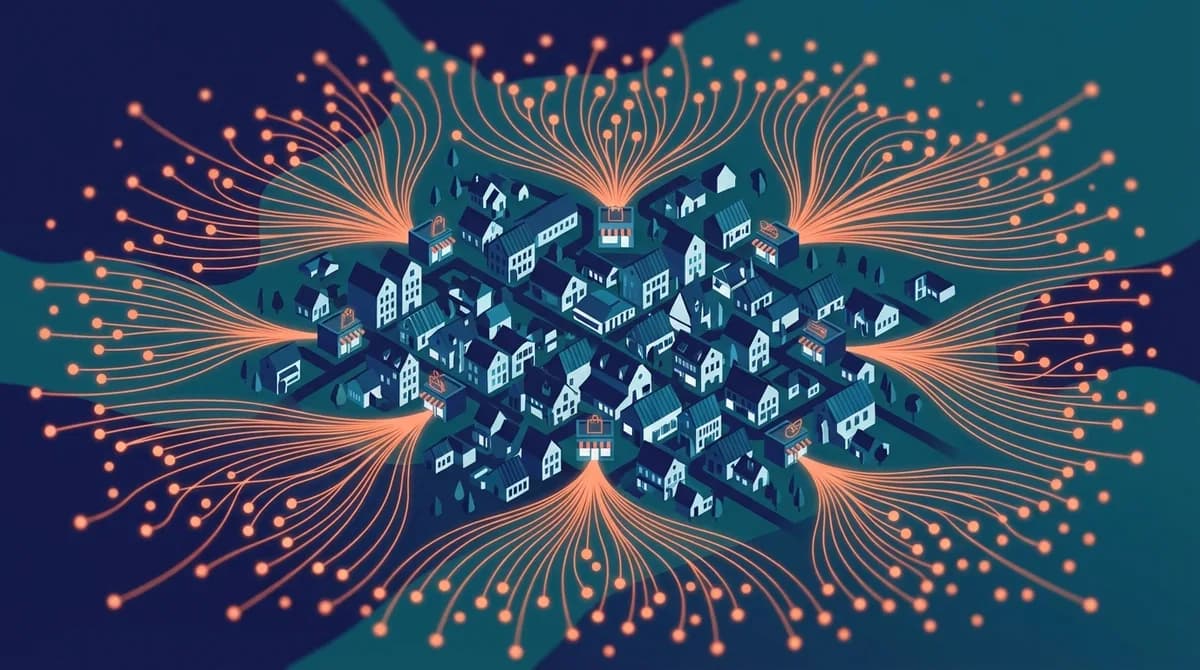
Here's a number that surprised even us: 234,306 people in Sweden have subscribed to receive deals from local stores using Commentsell.
That's 2.3% of Sweden's entire population. One in every 43 Swedes now gets deals sent directly to them via Messenger or Instagram DMs from a store that uses our platform.
And to be clear — these aren't our subscribers. They're the stores' subscribers. Every single one of those 234,306 people actively chose to follow a local store and receive its offers. No one signed them up automatically. No one tricked them with a pop-up. They commented on a deal, liked what they saw, and opted in for more.
That's a massive shift in how Swedish consumers want to discover deals.
Let's Put That Number in Perspective
234,306 people is a lot. But the most important part isn’t the size — it’s the intent behind it.
These are shoppers who have explicitly said: "Yes, I want to hear about deals from my local store. Send them to me directly."
That’s what makes subscriber-based marketing different. It’s not about renting attention through ads or hoping someone happens to see your flyer. It’s about building an audience that asks to be notified.
And these subscribers were built the simplest way possible: stores posted real offers people wanted, customers reserved them with a comment, and many opted in for the next one.
How Store Subscribers Actually Work
For those unfamiliar with the model, here's how it works in practice:
A store posts a deal on Facebook or Instagram — say, 30% off a popular product. Customers comment to reserve their item. Our system automatically confirms the reservation and sends them a message.
At that point, the customer can choose to subscribe to that store's future deals. If they do, they'll receive a notification every time the store posts a new offer. No app to download, no account to create. Just a direct line from the store to the customer's Messenger or Instagram inbox.
This is what makes the model so powerful. Every single deal a store posts is also a subscriber acquisition opportunity. The store isn't just selling a product — it's building an audience for every future campaign.
Over time, stores build subscriber bases of hundreds or even thousands of people. These are customers who have already bought from them, already trust them, and are actively asking to hear more. That's the kind of audience most businesses spend thousands on advertising to build.
Why This Number Matters
Think about what traditional grocery marketing looks like.
You print thousands of flyers. You pay for newspaper ads. You put up shelf displays and hope customers notice them. The reach is broad but unfocused. You have no idea how many people actually saw your promotion, let alone acted on it.
Now compare that with 234,000 people who have raised their hand and said: "Yes, I want to hear about your deals. Send them to me directly."
That's not passive advertising. That's a guaranteed audience. When a store with 2,000 subscribers posts a deal, those 2,000 people get notified. They see it. And a significant percentage of them act on it — commenting to reserve, showing up at the store, and buying more than just the deal item.
The difference between traditional marketing and subscriber-based marketing is the difference between shouting into a crowd and having a conversation with someone who's already listening.
A Behavior Shift Is Happening
When we started, the idea of subscribing to your local grocery store's deals via social media was new. People were used to flipping through paper flyers or checking weekly ads online. The idea that you'd get a message on Messenger saying "Your local store has 40% off diapers this week" felt unfamiliar.
Today, hundreds of thousands of Swedes have made that their normal. They open Messenger or Instagram, see a deal from their local store, comment to reserve it, and pick it up on their next visit. It's faster, more personal, and — judging by the numbers — exactly what consumers want.
What's remarkable is how the growth has compounded. It starts with a single deal post. A few customers comment. Their friends see the comments and the engagement on the post — "Why does this post have 200 comments?" — and check it out. They try it. They subscribe. They tell their friends. The cycle repeats.
Every comment on a deal is visible social proof. When someone scrolls past a grocery store post with 150 comments, curiosity kicks in. That curiosity turns into a first reservation, and that first reservation often turns into a long-term subscriber.
This is why the growth has been so organic. The product markets itself every time someone uses it.
What This Means If You Run a Store
If you're a store owner considering Commentsell, here's what 234,000 subscribers across the platform tells you:
Consumers Are Ready
You're not asking customers to adopt some unfamiliar behavior. Hundreds of thousands of Swedes already know how comment-to-reserve works. Many of them are probably already doing it at a competing store. The learning curve for your customers is essentially zero — they've seen it, they understand it, and they're looking for more stores to subscribe to.
The Network Effect Is Real
When a subscriber is used to reserving deals at one store, they're far more likely to subscribe to another. The more stores on the platform, the more natural it feels for consumers. We've seen this play out across Sweden — when a new store joins in an area where other stores are already active, their subscriber growth is significantly faster because the consumer behavior is already established.
Direct Reach Beats Algorithms
These subscribers get your deals delivered straight to their inbox — no fighting the Facebook algorithm, no paying for ads, no hoping they see your post in their feed. This is owned audience, the most valuable kind of marketing channel. You built it, you control it, and no algorithm change can take it away from you.
Compare this to posting on your Facebook page and hoping the algorithm shows it to your followers. Organic reach on Facebook business pages has dropped to single-digit percentages in many cases. But a Messenger notification? That gets opened.
It Drives Real Foot Traffic
Subscribers aren't just numbers on a screen. They're people who come into your store to pick up what they've reserved — and most people buy additional items while they're there. That's the real magic of the model. The deal gets them through the door, and once they're in your store, they shop.
A subscriber base of 1,000 people means that every deal you post is potentially putting hundreds of extra customers through your door that week. Customers who were already planning to shop somewhere — and now they're shopping at your store because you gave them a reason to.
From 0 to 234,000
This audience wasn't built overnight, and it wasn't built by us. It was built by hundreds of store owners across Sweden who committed to engaging their customers through social media.
Every store that posted a deal contributed. Every customer who commented to reserve contributed. Every share that extended the reach to someone new contributed. 234,000 subscribers is the sum of thousands of individual decisions — by store owners to try something new, and by consumers to opt in.
Some stores on our platform have built subscriber bases of several thousand on their own. Others joined recently and are just getting started with their first few hundred. But they're all part of a movement that has now reached 2.3% of Sweden's population.
The stores that started early have the biggest audiences today. They've had years to build their subscriber base, and the compounding effect is real — every deal they post reaches more people, drives more engagement, and attracts more subscribers. The gap between stores that are building this audience and stores that aren't is widening every week.
What's Next
234,000 subscribers in Sweden is a milestone, but it's also a proof point. It proves that consumers want a more direct, more personal way to discover deals from their local stores. It proves that the comment-to-reserve model isn't a trend — it's a behavior shift that's here to stay.
We're now bringing this model to new markets. Our first US customer, Swensen's Magic Markets in Idaho, is already seeing the same explosive engagement that Swedish stores experienced — going from 2 likes per post to over 100.
The playbook works. The consumer demand is there. And with 234,000 subscribers as proof, the question for store owners isn't whether this model works.
The question is: are your competitors building this audience while you're not?
Want to start building your subscriber base? Schedule a demo and see how stores across Sweden are reaching customers directly.